The end of advertising?
In the end, as the innovation matures, regulations appear and there are less loop holes to exploit as the successful companies will be those that fixed.
Subscribe to my newsletter to see content first:
This week - attacking advertising seems to have bubbled up to the fore so I look at two leading commentators perspectives and why I think they well - miss the point.
Finding the villain.
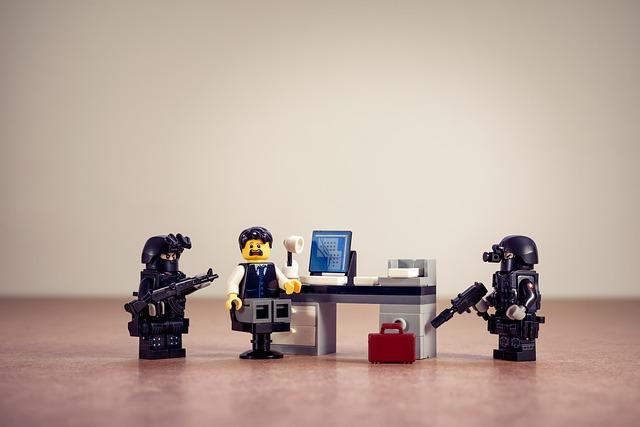
Advertising has been the villain for as long as I can remember. Even internet marketers found a way to criticise TV advertising because you couldn’t measure it.
Farhad Manjoo in the NY Times has a piece on advertising being the central villain online.
He suggests that without it many issues we are seeing online today would disappear, giving two examples:
- Russian trolls would not be able to hone their messaging as hey could not test its impact using advertising first.
- “Nutty content” on YouTube Kids (I assume he means the computer generated animations I discussed in a previous newsletter).
Finally he suggests that the ad industry produces endless incentives for gaming the system that are only fixed after they appear.
It is an interesting proposition and certainly the world would be a different place without advertising. It would result in some very well known companies disappearing, including potentially the very publisher Farhad is writing for.
Overall though, it would be better in some ways and worse in others. It is difficult, maybe impossible, to get consensus on or even understand the full impact. I think it would limit innovation online for example. But there is one thing I am sure about. There will always be people looking to game a system. The system would just be different.
Actually, I could argue the true villain in both those examples is artificial intelligence as they are really about easier to use interfaces built on top of algorithms that make content faster to create and easier to target. Just this week, the creation of “deep fakes” became mainstream thanks to increasing awareness of software that allows you to change the face of someone in a video.
But I am not arguing that either.
Rapid innovation is the true villain, as everyone rushes to adopt new approaches in a positive way, others rush to take advantage in, let’s say, less positive ways.
I don’t believe anyone would argue for a slowdown in innovation, though those affected by it might like to see it slowed down. In the end, as the innovation matures, regulations appear and there are less loop holes to exploit as the successful companies will be those that fixed the issues.
Don’t blame the media.

Umair Haque also wrote a piece on Medium last week on why the failure of media is not the fault of technology but advertising.
He suggests that the ad agencies took the easy route of reinventing the offline billboards by creating banners and using algorithms to target them rather than a human, creative one.
Apple tried the latter approach though even this was positioned as a reinvention of TV advertising. They eventually, after issues with pricing and getting the ads live, shut it down in 2016.
Publishers could also try these types of approaches - though they are not exactly incentivised to encourage clicks that take their readers away from their website.
With display advertising, the attention should not solely be on clicks but whether it was seen. Of course, people screen out ads but the best ads can cut through - even online - and especially when they make it to the right audience.
Keeping things simple, advertisers will go where their audiences are and then (theoretically!) spend as little money as they can to deliver their message to them. Inertia inevitably happens though.
For as long as I can remember, Mary Meeker has in her annual state of the Internet reports, pointed out that advertising is overspending in print and underspending in mobile. Advertising spend in print is finally declining whilst spend in mobile advertising is indeed rising.
Outside of Google and Facebook, advertising is much more difficult - especially for smaller companies. Upgrading the platforms to make them more accessible will happen over time as the use artificial intelligence gets integrated more and more. Transparency and reducing fraud both remain a heavy focus for the industry today though.
The smallest companies will never be able to invest significant sums of money in creative as Umair would like to see though and if everyone did manage somehow to hit that level then an even higher bar would be required to stand out from the crowd.
About Riaz

I've spent over 20 years building and scaling B2B products, services and marketing technology - from early-stage startups through to exits, and now as CEO of Radiate B2B - the B2B ad platform.
Along the way I've led teams, launched products, built and sold companies, and spoken around the world about data, AI and the future of marketing and work.
Today I split my time between working directly with companies as a consultant and fractional operator, mentoring founders and leaders, and speaking to audiences who need someone to translate what's happening in technology into decisions they can act on.
Read the full storyRecommended posts

AI and retail. Tech looking outwards. Positive Social Media
Take a look at AI and its potential impacts in retail before ending on some positivity in social media for once.
Read moreThoughts on martech trends in 2017
Having spent the best part of two decades working on the cutting edge of martech, I spend a chunk of time talking (debating!) about what's next and.
Read more
The web is dying
Unbelievably, the web has been around for three decades. We are at the start of a new journey that will see the web as we know it disappear.
Read more