Artificial intelligence more profound than electricity or fire.
We already know one soundbite from Sundar in the interview: Artificial intelligence will be more profound than electricity or fire.
Subscribe to my newsletter to see content first:
A deep dive into artificial intelligence this week looking at some of the announcements about what is possible today as well as a look into the future disruption of the workplace.
Possible today.
The possibilities from artificial intelligence are picking up steam again (did it ever really stop?).
Airing on YouTube later today, Google CEO, Sundar Pichai and Youtube CEO Susan Wojcicki are interviewed on the successes and challenges tech is bringing to the workforce today.
We already know one soundbite from Sundar in the interview:
Artificial intelligence will be more profound than electricity or fire.
He also talked about how much we already use artificial intelligence in our day to day lives. Just yesterday, someone was stunned at how easily I could find a photo from a few years ago thanks to Google Photo’s ability to recognise objects in a photo.
Popular definition of artificial intelligence remains something out of a Jetsons cartoon though and this definition has been generations in the making. Rosie the robot, from the aforementioned cartoon first appeared all the way back in 1962. The result is that stories of what artificial intelligence can do in discrete situations get extrapolated beyond what is actually possible.
What is possible today though is still astounding.
Microsoft recently showed that artificial intelligence can imagine a bird from a short piece of text: “Create a bird that is red and white with a very short beak.”
The result is the image below.
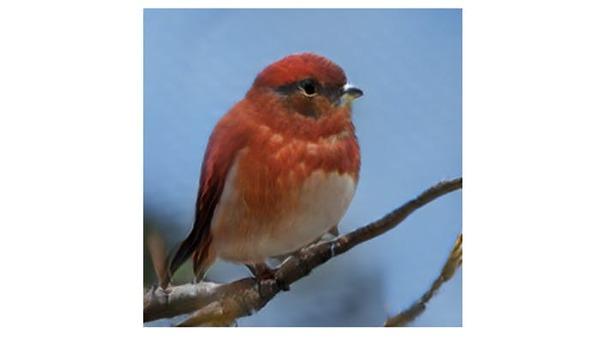
There is clearly plenty of imagination going on in that photo - nowhere was the shape of the bird mentioned, nor that it should be placed on a branch.
However, the researchers showed that this imagination came from historical knowledge of vast numbers of photos viewed. More images showed birds on a branch than flying. So really this is more literal imagination and human-like imagination. When the researchers suggested drawing a bus floating on a lake, it struggled.
This still opens up potential new tools bringing new opportunities. This for example might eventually change the meaning of stock photography or allow Photoshop to fix images quickly.
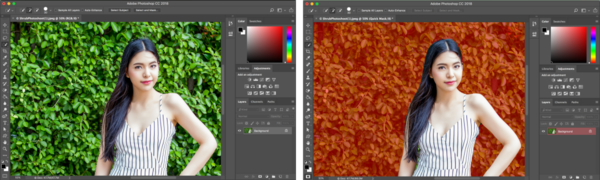
Just last week, Photoshop rolled out an AI tool to select objects within an image - something that was a laborious task in the past.
Some might contend that it cannot do it as well as if it was done manually and that is probably true but it is unlikely to be noticeable in most scenarios.
Even today things go wrong with photo editing with Vanity Fair recently giving Oprah three hands - something a future AI might be able to warn of or prevent completely.
Tomorrow?
Whilst there are plenty of opportunities with artificial intelligence, perhaps the biggest fear is around the workplace with people imagining upheavals on a much larger scale to the disruption of the textile industry in Great Britain as factories came online.
The World Economic Forum have released an excellent report looking at the future of the workplace and how jobs might transition in the future. Download it here.
Some of the highlights:
- Women are more affected by this disruption than men (57% of jobs disrupted)
- Government, trade bodies, companies and individuals will all need to work together to minimise disruption
- Administrative and production roles are expected to see the most upheaval by 2026
- Something that always gets overlooked is the impact on leadership roles. How will those change? The Harvard Business Review takes a look.
One aspect that is already changing is the ability to make better and faster decisions based on sifting through the vasts amount of data that companies now generate.
Here bias may have an impact on businesses. Artificial Intelligence has been shows to have the biases of their programmers built into them. As companies adopt uniform technology platforms, their ability to make unique decisions that outperform competitors may reduce, making it even more important to understand how decisions were came to.
About Riaz

I've spent over 20 years building and scaling B2B products, services and marketing technology - from early-stage startups through to exits, and now as CEO of Radiate B2B - the B2B ad platform.
Along the way I've led teams, launched products, built and sold companies, and spoken around the world about data, AI and the future of marketing and work.
Today I split my time between working directly with companies as a consultant and fractional operator, mentoring founders and leaders, and speaking to audiences who need someone to translate what's happening in technology into decisions they can act on.
Read the full storyRecommended posts

2018 - the death of the chatbot?
So if smart assistants are the future and not chatbots, is this the end of the chatbot?
Read moreStrawberry picking robots, winning users and societal challenges.
This week returns to strawberry picking robots, overcoming inertia to win users and the challenges of user generated content for children and wider.
Read moreWhats next for messaging as another stalwart departs.
For most of you this will be a 'so what' moment but it will be on almost all tech news sites as it was by far the biggest instant messaging service in.
Read more